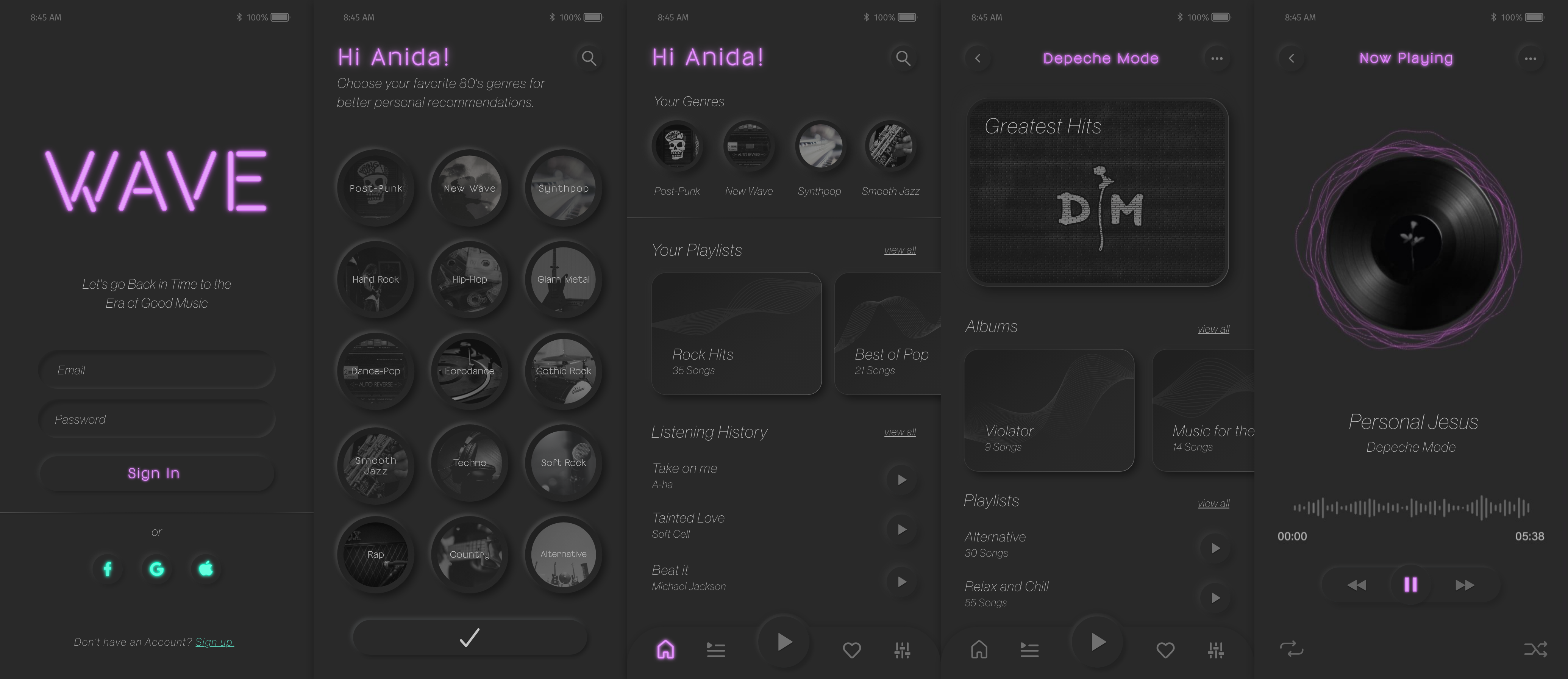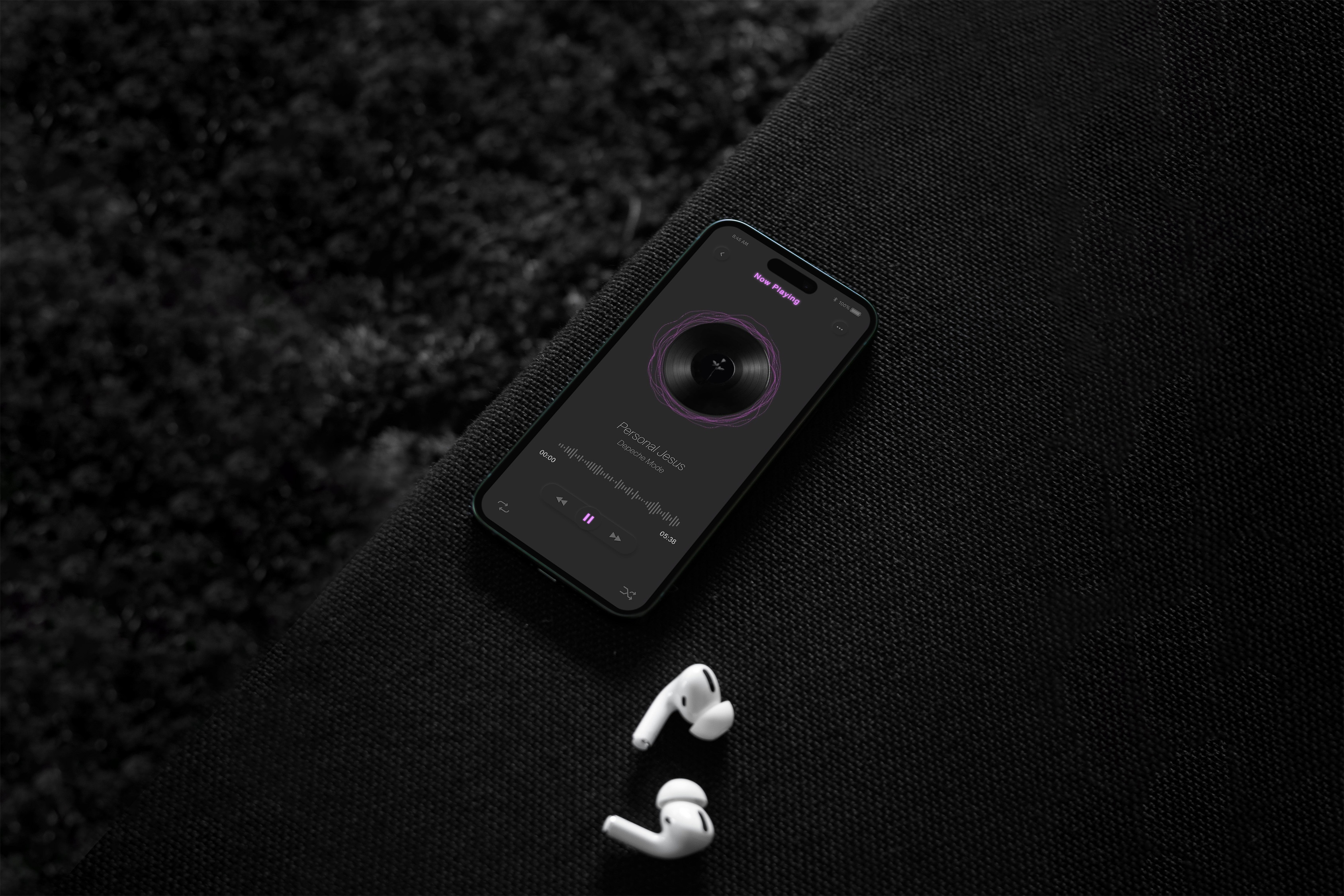
Wave is a conceptual music app exploring how the atmosphere of nostalgic listening experiences can be translated into a contemporary digital product.
The project focuses on the relationship between emotional expression and usability: creating an interface with a distinctive character while keeping playback, discovery, and navigation direct.
I structured the experience around four recurring actions:
⁕ Start playback immediately
⁕ Move between tracks
⁕ Discover artists and music
⁕ Create and manage playlists
I adopted one guiding rule: no visual decision should slow down a core interaction. This led to simplified high-frequency screens, clear touch targets, and predictable navigation.
⁕ No hidden or gesture-dependent navigation
⁕ No heavily skeuomorphic controls
⁕ No visual effects that compromise readability
Instead of recreating a specific historical interface, I abstracted recognizable qualities of retro-futurism. Color and glow establish hierarchy, while animation communicates playback state and response. Spacing and familiar controls keep the visual richness structured.
I reviewed the concept against three criteria: clarity, speed, and focus. Iteration concentrated on contrast, layout density, motion timing, and whether important actions remained immediately recognizable.
1. Balancing Emotion and Efficiency
Rather than treating visual expression and usability as competing goals, I used each to constrain the other. Expressive elements were concentrated around content and playback, while navigation remained familiar.
2. Reducing Cognitive Load
Spacing, hierarchy, and predictable patterns organize the visually rich interface and help users identify the next relevant action.
3. Making Motion Functional
Animation confirms actions, represents playback state, and directs attention. It is tied to interface behavior rather than added as independent entertainment.